Orimonya Pattern-Weave Coaster
Orimonya Pattern-Weave Coaster
Couldn't load pickup availability
Orimonya
Size:
Blue base: Approx. 9 cm × 9.5 cm
Ecru base: Approx. 9.5 cm × 10 cm
Materials: 100% cotton
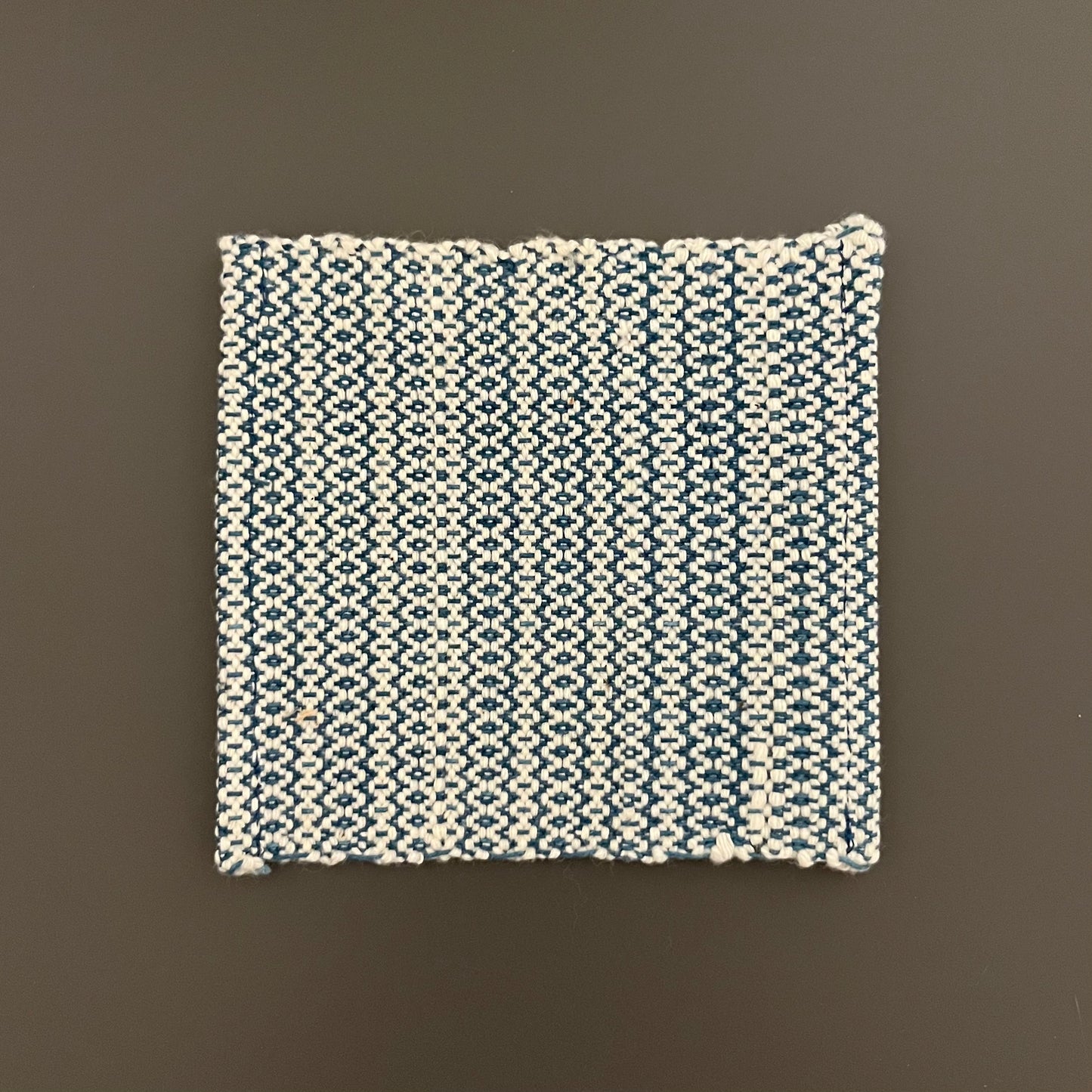
Each coaster is woven at Orimonya, a non-profit organization based in Yonago, Tottori Prefecture, using a patterned weave structure. Indigo-dyed yarns are combined with ecru cotton to create a surface filled with fine, detailed motifs.
By changing the yarn colors used for the ground and the pattern, two variations are produced: one with an indigo-dyed ground for a blue-based look, and one with an ecru ground for a softer tone.
As each piece is handwoven, the pattern and size may vary slightly from coaster to coaster. Please select your preferred piece from A to D when placing your order.
Orimonya
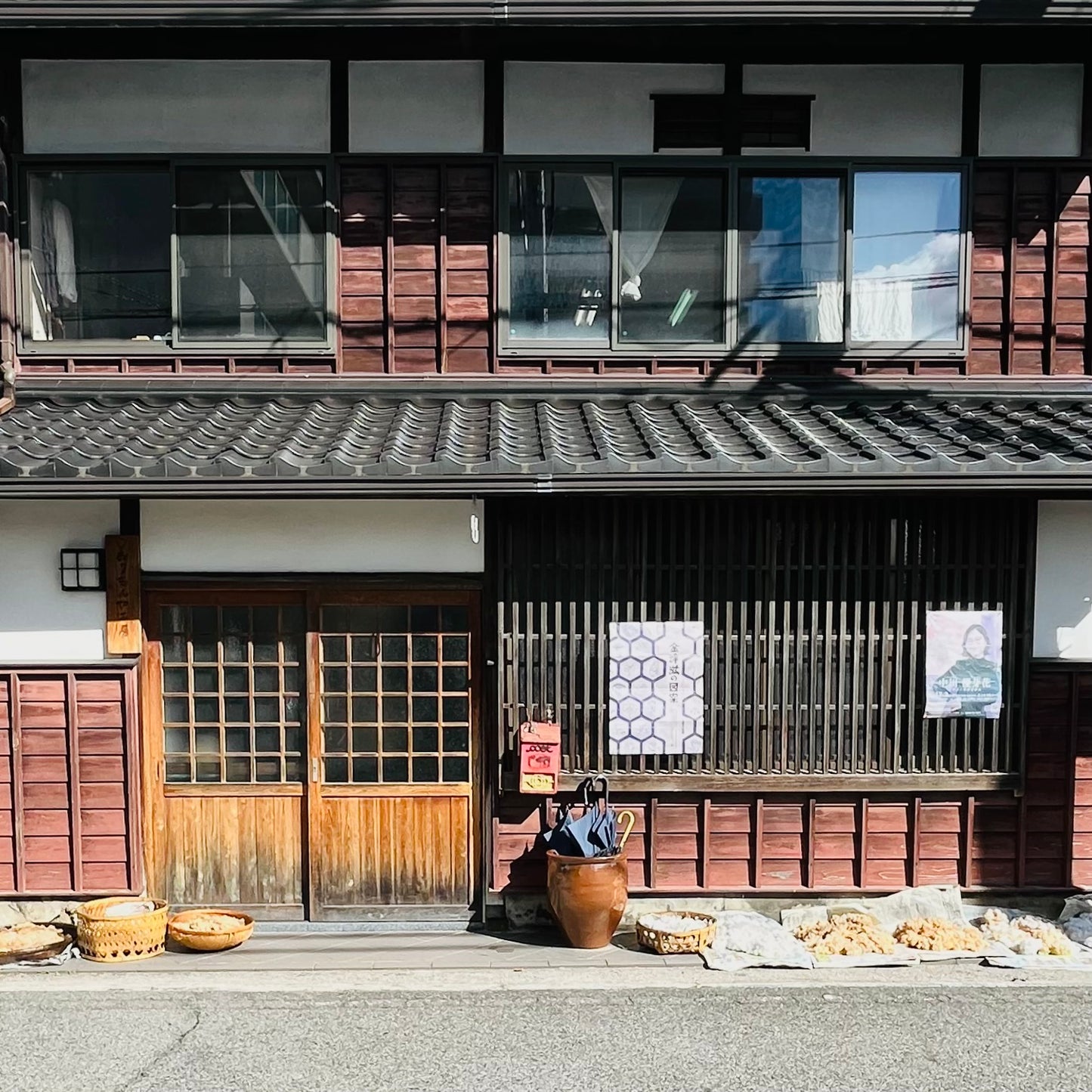
This product is made by Orimonya, an NPO active on the Yumigahama Peninsula, which links Yonago City and Sakaiminato City in Tottori Prefecture. In this region, once a major production area for Hakushu cotton (“Hama-wata”), Orimonya grows Hakushu cotton without agricultural chemicals and carries out the entire process in-house, from cultivating the cotton and spinning the yarn to plant-dyeing and weaving.
Weaving involves many different steps, from simple to complex. At Orimonya, including people with physical or mental disabilities, each person takes on tasks that suit their abilities and pace. By sharing the work in this way, everyone contributes to weaving a single piece of cloth. The NPO Orimonya serves as a place of collaboration where many people can be involved in textile work in a way that feels manageable for them.
For dyeing, they use locally familiar plants and trees such as Japanese holly (soyogo), Japanese knotweed (itadori), desho grass (karukaya), mimosa, akamegashiwa, galls (gobashi), plum, loquat, as well as indigo. Most of these materials are foraged from nearby fields and hillsides and then simply boiled to extract the dye. For mordants, they use lye, slaked lime, and iron rust.
Each of the looms used in the workshop differs slightly in structure and operation. They are looms made between the Meiji and Showa eras, passed down from people in the surrounding communities and built by local carpenters who each applied their own ingenuity. Today, about ten looms are kept in working condition and used with care—not as antiques for display, but as fully functional tools.
When visiting the workshop, the steady rhythm of the looms and the occasional bursts of cheerful conversation left a strong impression. In this everyday atmosphere, careful, warm handwork is used to weave unique, high-quality textiles, one piece at a time.
Share